Градиент ризографа с CSS Houdini (HTML код)
<div class="risograph"></div>


<p class="warning" hidden>

  Please use a browser with CSS Paint API enabled

	<br>

	(Chromium with <code>enable-experimental-web-platform-features</code> turned on in <code>chrome://flags</code>).

</p>


<script>

  if ('paintWorklet' in CSS) {

    CSS.paintWorklet.addModule('/chriskirknielsen/pen/wveMqxv.js');

  }

  else {

    document.querySelector('.warning').hidden = false;

  }

</script>
Градиент ризографа с CSS Houdini (CSS код)
@property --risograph-color {

  syntax: "";

  inherits: true;

  initial-value: black;

}


@property --risograph-angle {

  syntax: "";

  inherits: true;

  initial-value: 0deg;

}


@property --risograph-easing {

  syntax: "";

  inherits: true;

  initial-value: easeInOutQuint;

}


:root { /* Update values here! */

	--body-bg: #000000;

	--risograph-color: #ffffff;

	--risograph-angle: 45deg;

	--risograph-easing: easeInOutQuint;

	--demo-size: min(70vmin, 400px);

}


body {

	display: flex;

	justify-content: center;

	align-items: center;

	flex-direction: column;

	height: 100vh;


	color: #ffffff;

	background: var(--body-bg, #000000);

}


.risograph {

	/* Works best with a square */

	width: var(--demo-size, 200px);

	height: var(--demo-size, 200px);


	border: 1px solid #808080;

	background-image: linear-gradient(var(--risograph-angle, 0deg), var(--risograph-color, hotpink), 42%, transparent); /* Fallback */

}

@supports (background: paint(a)) {

	.risograph {

		background-image:

			linear-gradient(var(--risograph-angle, 0deg), var(--risograph-color, hotpink) 2.5%, 20%, transparent 50%),

			paint(risograph);

	}

}


.warning {

	padding: 2em;


	text-align: center;

}
Градиент ризографа с CSS Houdini (JS код)
if (typeof registerPaint !== "undefined") {

  /**

      * Convert an angle to degrees.

      * @param {String} angle Value of an angle in CSS syntax (e.g.: 90deg, -50rad, 10grad, -0.25turn)

      * @return {Number} Angle value expressed in degrees

      */

  function parseDegrees(angle) {

    if (angle.toLowerCase().includes("grad")) {

      return parseFloat(angle.replace("grad", "")) * 180 / 200;

    }

    if (angle.toLowerCase().includes("rad")) {

      return parseFloat(angle.replace("rad", "")) * 180 / Math.PI;

    }

    if (angle.toLowerCase().includes("turn")) {

      return parseFloat(angle.replace("turn", "")) * 360;

    }

    return parseFloat(angle.toString().replace("deg", ""));

  }


  /**

      * Retrieve an angle values as degrees in the [0;360[ range

      * @param {String} ang The angle value

      * @return {Number} The degree value contained within the [0;360[ range

      * */

  function singleCycleDegrees(ang) {

    const baseDeg = parseDegrees(ang) % 360;

    const deg = baseDeg < 0 ? 360 - Math.abs(baseDeg) : baseDeg;

    return deg;

  }


  /**

      * Apply an easing to a value

   * @source https://gist.github.com/gre/1650294

   * @param {Number} value Number between 0 and 1

   * @param {?String} type Easing type

      * @return {Number} Eased value

  */

  function easeValue(value, type = 'easeInOutQuint') {

    const easingFunctions = {

      // no easing, no acceleration

      linear: t => t,

      // accelerating from zero velocity

      easeInQuad: t => t * t,

      // decelerating to zero velocity

      easeOutQuad: t => t * (2 - t),

      // acceleration until halfway, then deceleration

      easeInOutQuad: t => t < .5 ? 2 * t * t : -1 + (4 - 2 * t) * t,

      // accelerating from zero velocity

      easeInCubic: t => t * t * t,

      // decelerating to zero velocity

      easeOutCubic: t => --t * t * t + 1,

      // acceleration until halfway, then deceleration

      easeInOutCubic: t => t < .5 ? 4 * t * t * t : (t - 1) * (2 * t - 2) * (2 * t - 2) + 1,

      // accelerating from zero velocity

      easeInQuart: t => t * t * t * t,

      // decelerating to zero velocity

      easeOutQuart: t => 1 - --t * t * t * t,

      // acceleration until halfway, then deceleration

      easeInOutQuart: t => t < .5 ? 8 * t * t * t * t : 1 - 8 * --t * t * t * t,

      // accelerating from zero velocity

      easeInQuint: t => t * t * t * t * t,

      // decelerating to zero velocity

      easeOutQuint: t => 1 + --t * t * t * t * t,

      // acceleration until halfway, then deceleration

      easeInOutQuint: t => t < .5 ? 16 * t * t * t * t * t : 1 + 16 * --t * t * t * t * t };


    // If the provided type is invalid, use a default instead

    if (typeof type !== 'string' || !easingFunctions.hasOwnProperty(type)) {type = 'easeInOutQuint';}

    return easingFunctions[type](value);

  }


  /**

      * Round a number to a specified decimal precision

   * @param {Number} number The number to round

   * @param {Number} precision Positive integer  specifying the number of decimal places to show

   * @return {Number} Rounded number

  */

  function round(number, precision = 3) {

    return parseFloat(number.toFixed(precision));

  }


  /**

   * Clamp a number in a range

   * @param {Number} number The number to clamp

   * @param {Number} min The minimum value to return

   * @param {Number} max The maximum value to return

   * @return {Number} The clamped number

   */

  function clamp(number, min = 0, max = 1) {

    return Math.min(max, Math.max(min, number));

  }


  /**

   * Remap a number from one boundary to another

   * @param {Number} number Initial number to map to a new boundaries

   * @param {Number} in_min The initial number's lower boundary

   * @param {Number} in_max The initial number's upper boundary

   * @param {Number} out_min The final number's lower boundary

   * @param {Number} out_max The final number's upper boundary

   * @return {Number} Remapped number

   */

  function remapNumber(number, in_min, in_max, out_min, out_max) {

    return (number - in_min) * (out_max - out_min) / (in_max - in_min) + out_min;

  }


  registerPaint("risograph", class {

    static get inputProperties() {

      return ['--risograph-color', '--risograph-angle', '--risograph-easing'];

    }


    paint(ctx, geometry, properties) {

      const { width, height } = geometry;

      const color = properties.get('--risograph-color').toString().trim();

      const angle = properties.get('--risograph-angle').toString().trim();

      const easing = properties.get('--risograph-easing').toString().trim() || 'easeOutQuint';


      // Define coordinate system

      const deg = singleCycleDegrees(angle);

      const xMin = 0;

      const xMax = width;

      const yMin = 0;

      const yMax = height;

      const lengthMin = Math.min(xMax, yMax);

      const lengthMax = Math.max(xMax, yMax);

      const lengthRatio = lengthMax / lengthMin;

      const modAngle = deg % 90;

      const isStraightAngle = modAngle === 0;

      const angleDelta = 45 + Math.abs(-45 + modAngle) * -1; // `45 + |-45 + α| * -1` gives us the max scaling at 45 and goes back down after that value (triangle peaks at 45, is between [0;90]) — plot it here: https://www.desmos.com/calculator

      const scale = remapNumber(angleDelta, 0, 45, 1, Math.sqrt(2) * lengthRatio); // sqrt(2) is the ratio of the diagonal inside a square copared to the side

      const pxSize = !isStraightAngle ? remapNumber(angleDelta, 0, 45, 1, 1.0875) : 1;


      // Define the color for all operations

      ctx.fillStyle = color;


      // Rotate the canvas by the required angle

      ctx.translate(width * 0.5, height * 0.5);

      if (!isStraightAngle) {ctx.scale(scale, scale);} // If the angle is not straight, scale up the canvas to cover the edges

      ctx.rotate(deg * Math.PI / 180);

      ctx.translate(-0.5 * width, -0.5 * height);


      for (let y = yMin; y < lengthMax; y++) {if (window.CP.shouldStopExecution(0)) break;

        for (let x = xMin; x < lengthMax; x++) {if (window.CP.shouldStopExecution(1)) break;

          const ratio = y / yMax;

          const randomFactor = clamp(Math.random() + 0.001, 0, 1);

          const alpha = round(easeValue(ratio * randomFactor, easing), 3);


          ctx.globalAlpha = alpha;

          ctx.fillRect(x, y, pxSize, pxSize);

        }window.CP.exitedLoop(1);

      }


      // Reset the transforms

      window.CP.exitedLoop(0);ctx.translate(width * 0.5, height * 0.5);

      ctx.rotate(-1 * deg * Math.PI / 180);

      ctx.translate(-0.5 * width, -0.5 * height);

      ctx.scale(1, 1);

    }});


}

//# sourceURL=pen.js
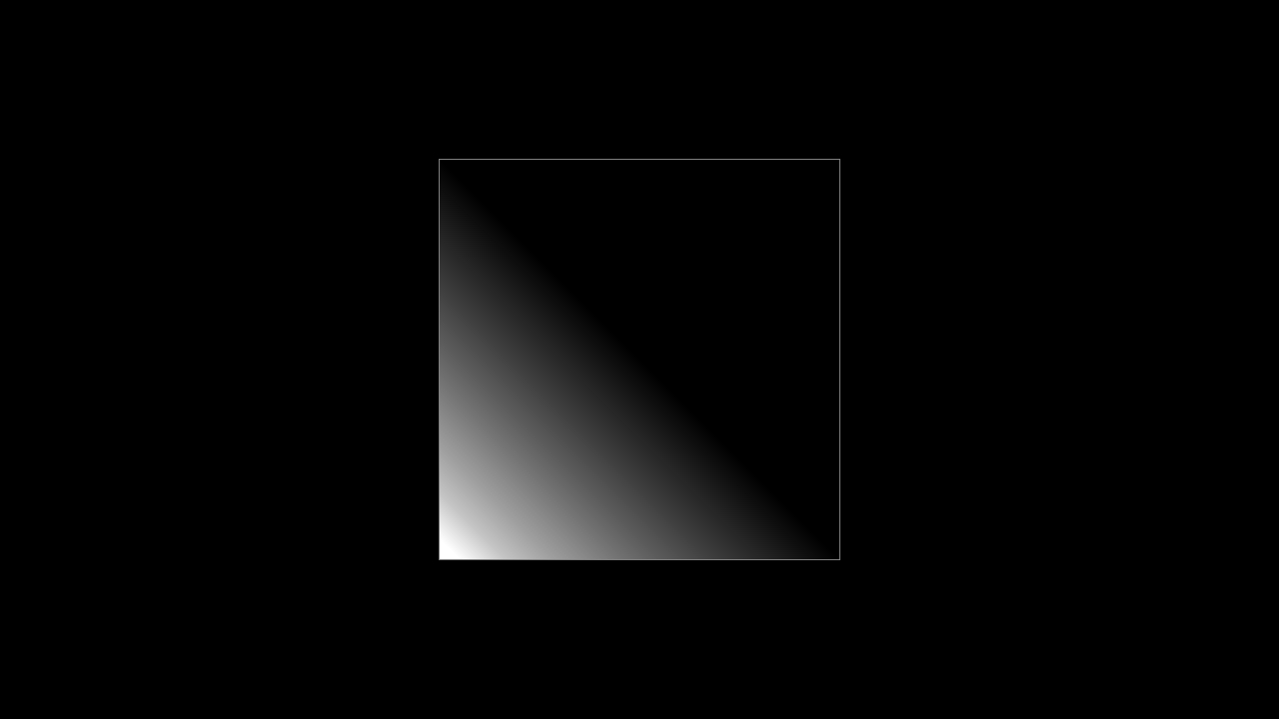
Градиент ризографа с CSS Houdini (Результат кода)
Comments